Kyndryl brand standards
Grid system
Overview
The grid system defines the structure and principles used to organize content with consistency and clarity. It underpins our visual identity and ensures all branded assets feel cohesive, precise, and intentional.
Structural principles
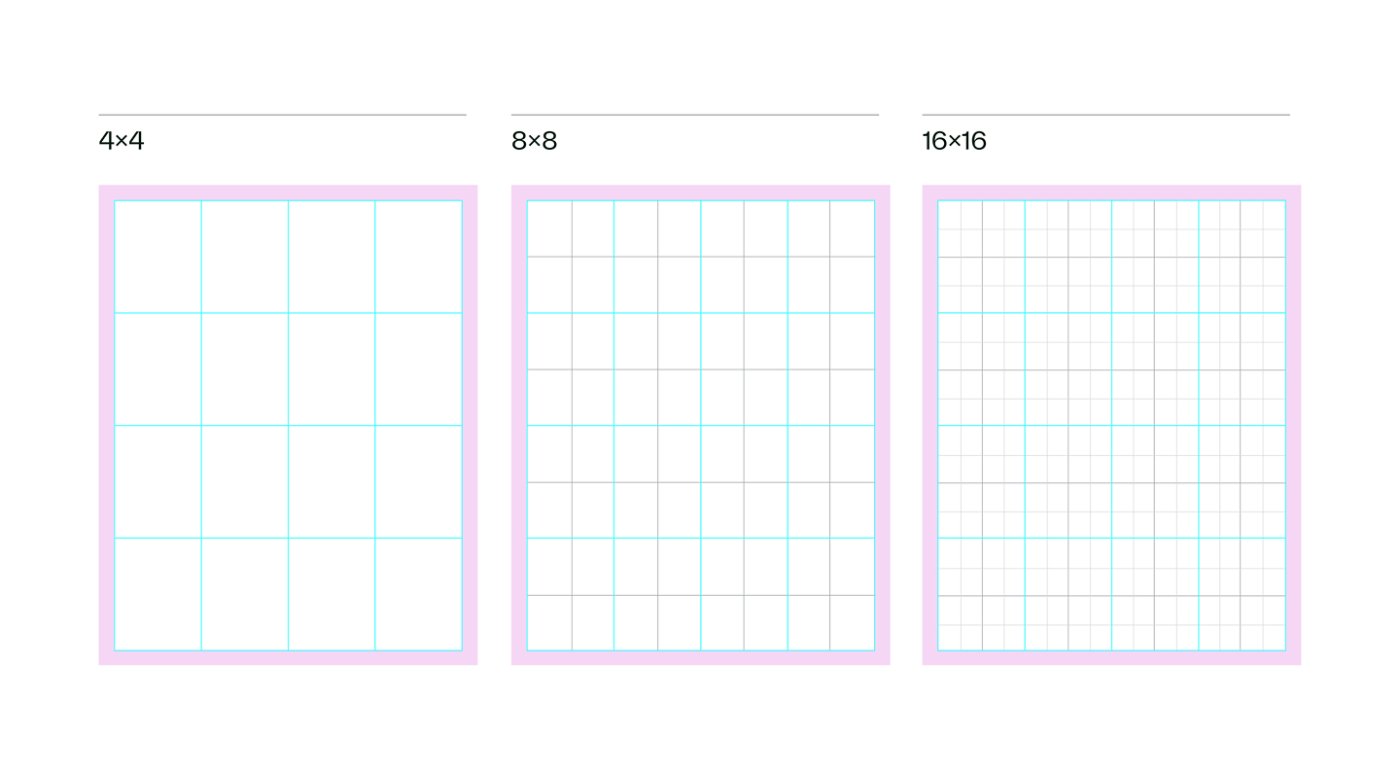
All grids are based on multiples of four.
At Kyndryl, our grid system is based on multiples of four — a decision rooted in the construction of our logo. This means that you can use any grid that uses multiples of 4 (e.g., 8×8, 16×16) as your design foundation, depending on content specifications and available space. However, no matter what grid you choose, the number of rows and columns should always be the same (e.g., 4×4 is acceptable but 4×8 is not). This structural principle is true whether there are margins and gutters in the grid or not.
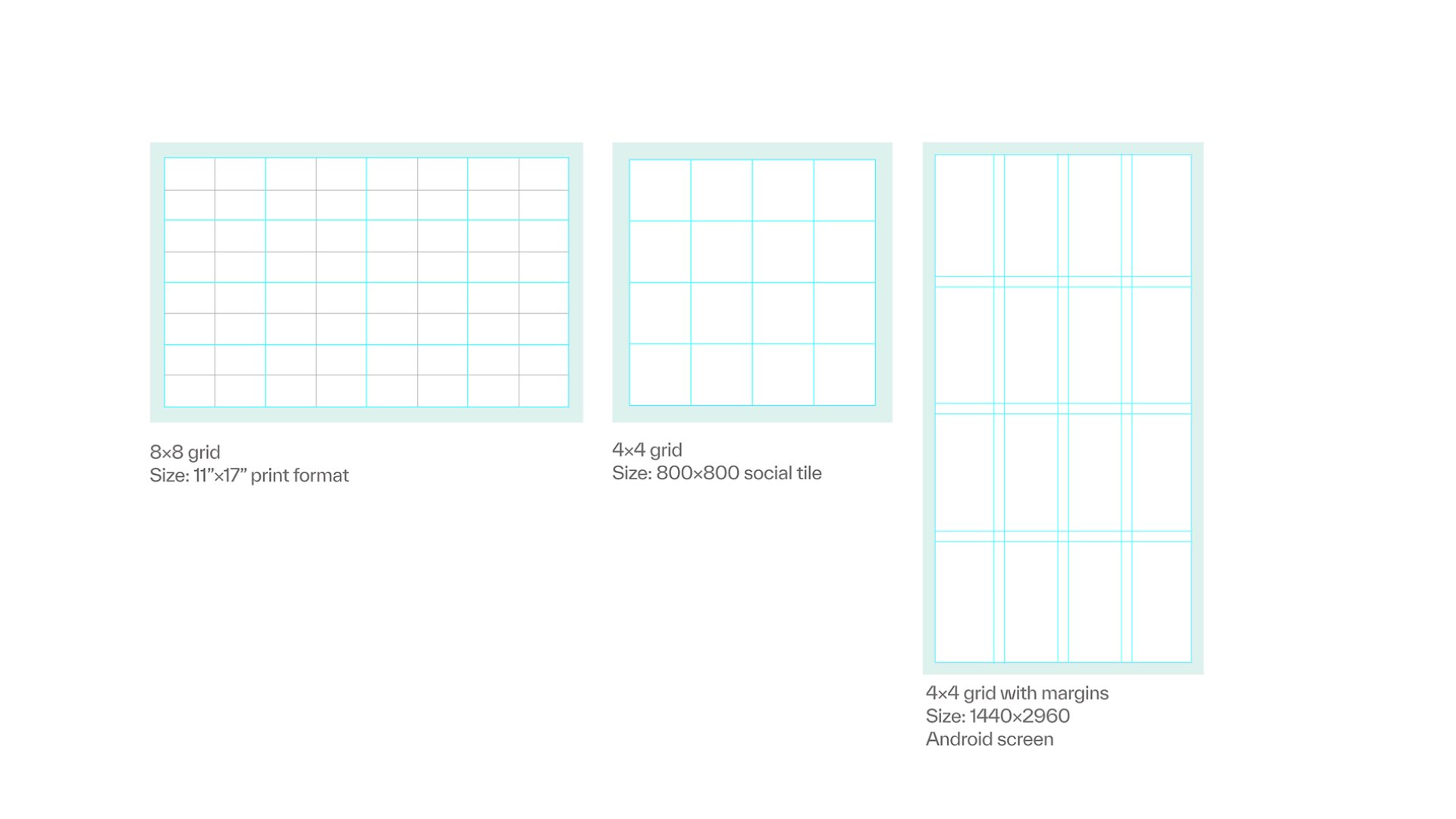
Our grid system is flexible.
While complex layouts may require more columns and rows, simpler layouts may work just fine with fewer — there is no “right” grid for any medium or format. To the right are a few examples to show how our grid system can adapt and flex based on various needs.
Note that these example layouts are not drawn to scale.
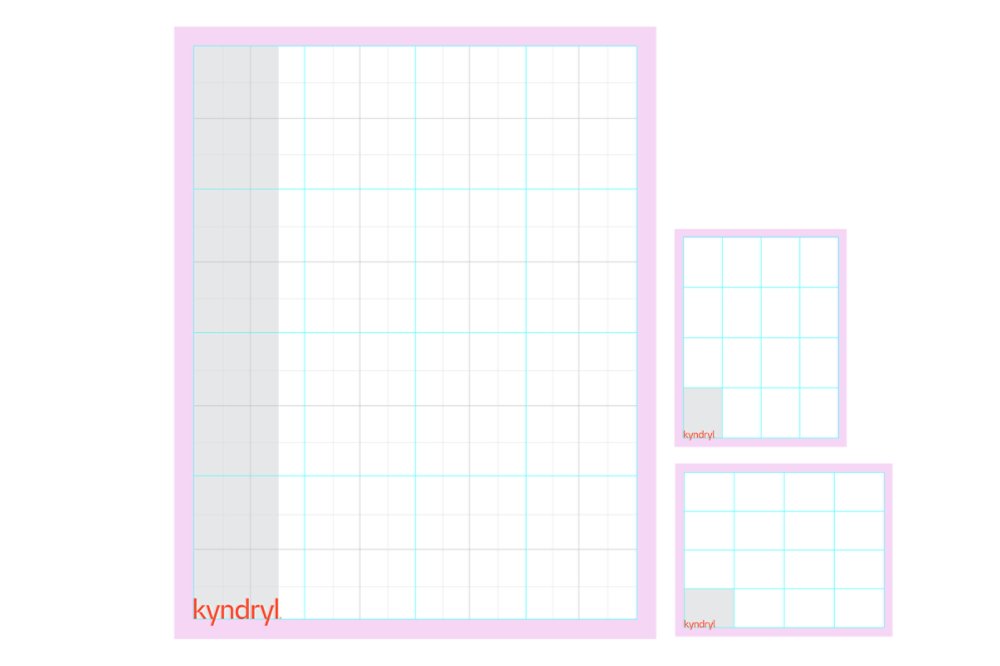
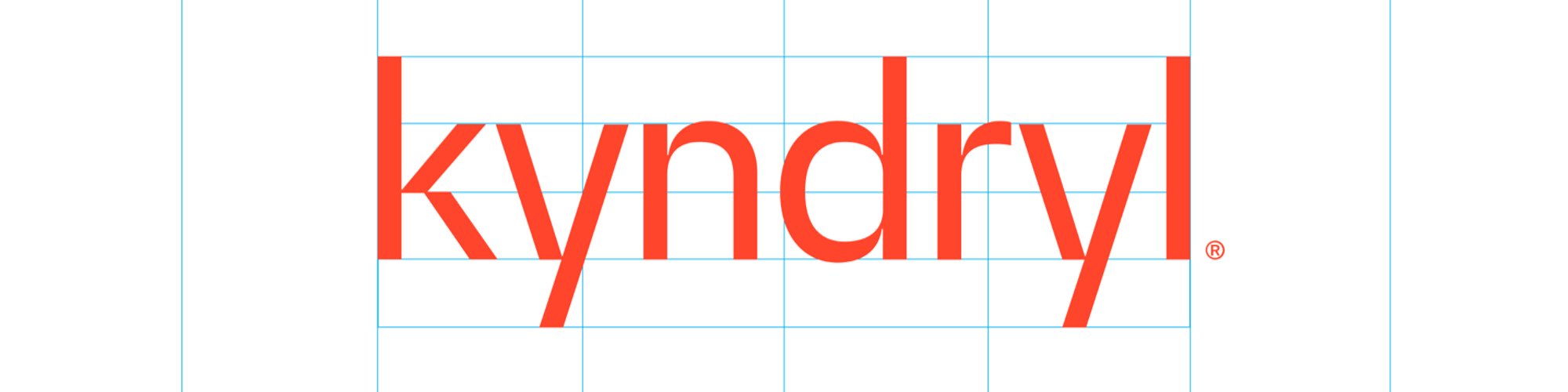
Our logo should span three columns of a 16×16 grid.
When sizing our Kyndryl logo, it can be helpful to envision a 16×16 grid, even if your actual grid is divided into fewer columns. When working with a 16×16 grid, our logo should span the width of three columns.
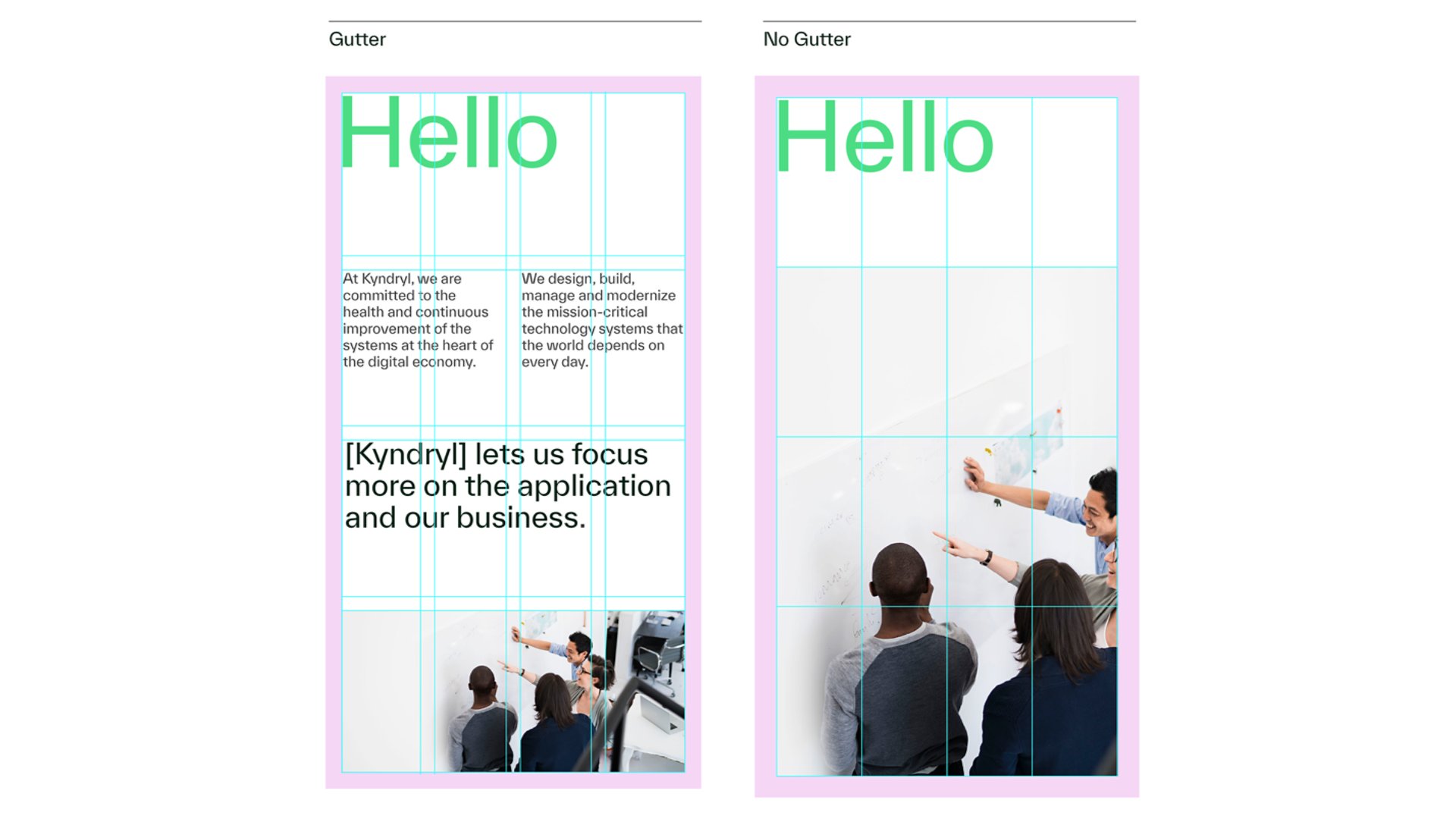
Our grid system can be used with or without gutters.
When designing complex layouts, use gutters to help structure multiple columns of content while ensuring legibility. When designing simpler layouts involving just a headline and logo, gutters are not necessary.
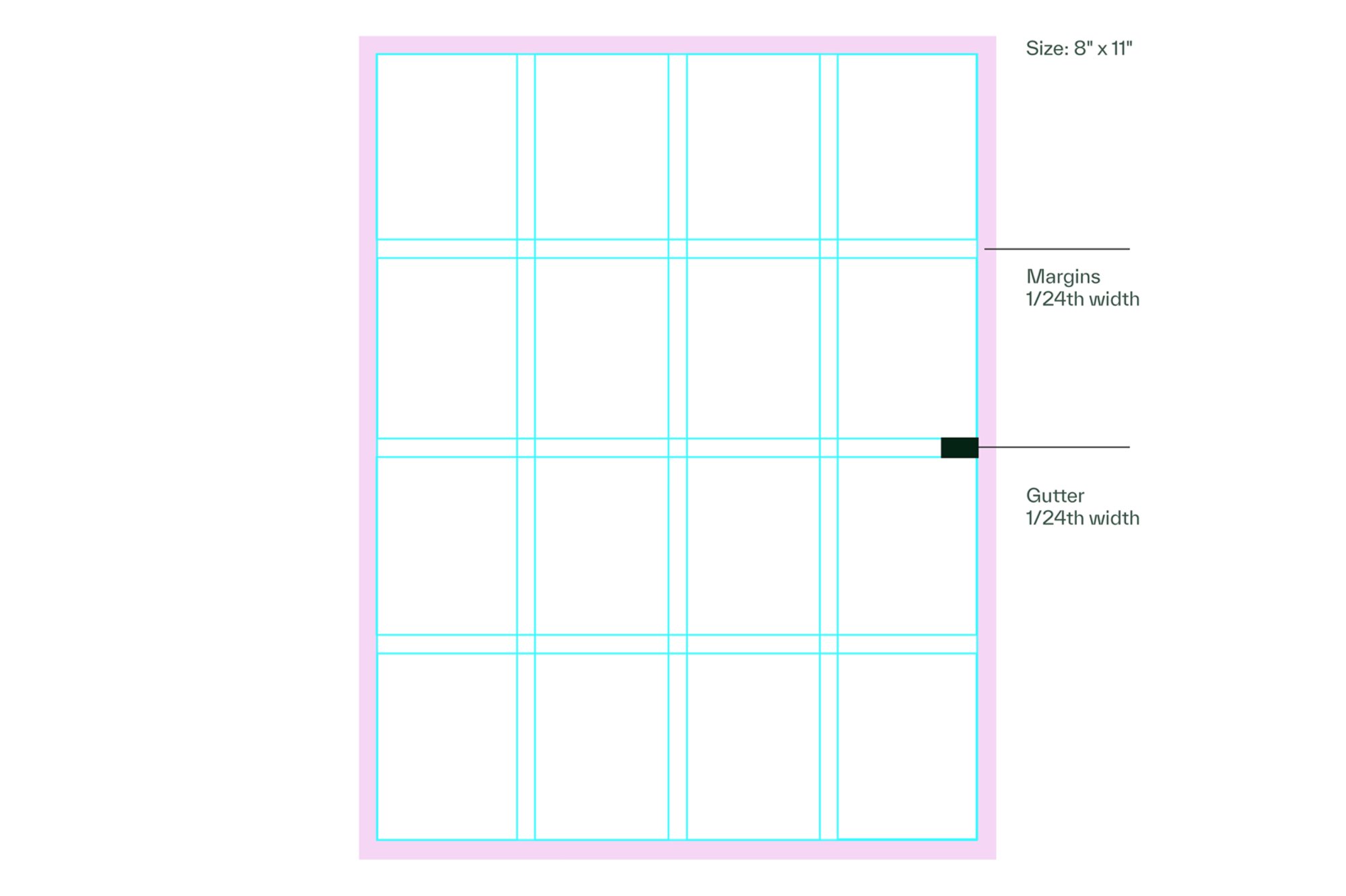
If choosing to use gutters, they should be set to a minimum of 1/24th the width of the layout. Default margins should also be set to 1/24th the width of the layout, although you can use wider margins in print as needed depending on the print safe area of the asset.
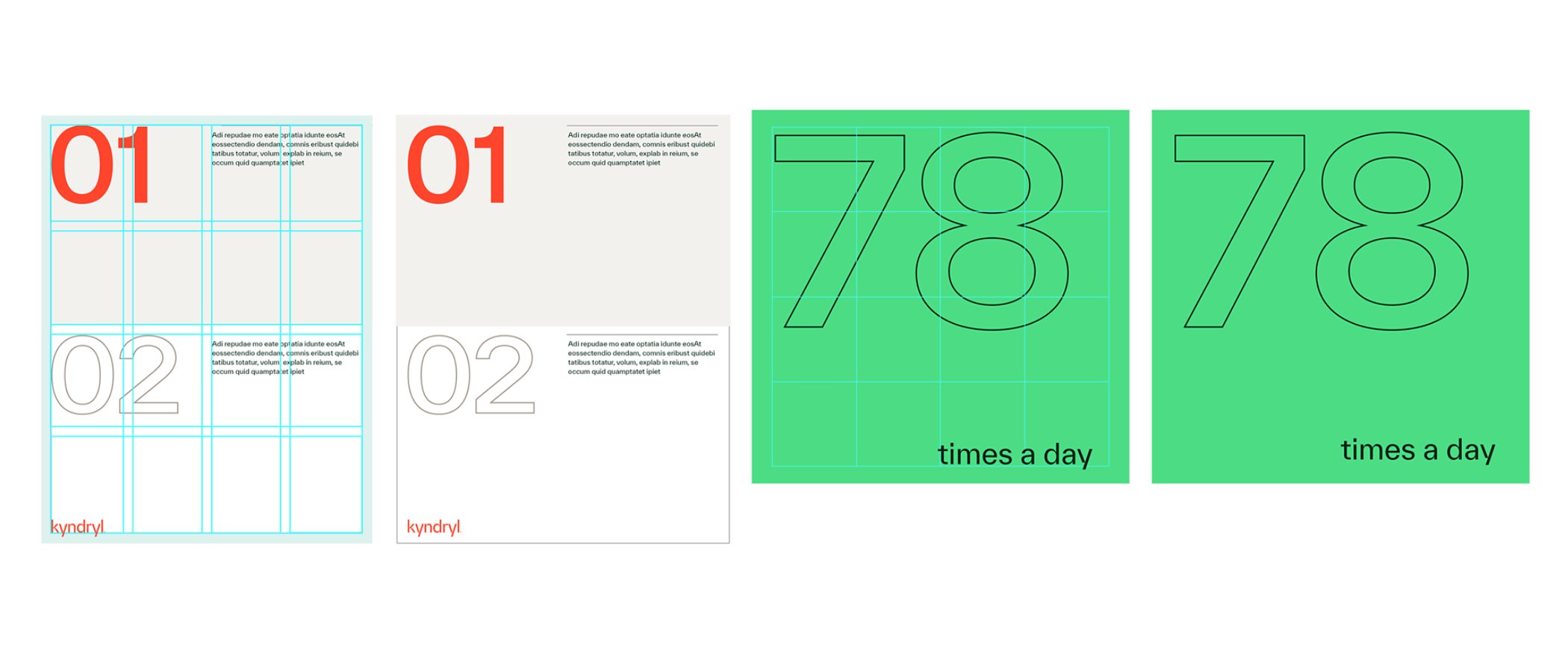
Our grid system in action
Below are a few examples of how content can be laid out using variations of our grid system.